
How it works
Robotaxis: How They Work and Where They Operate
A robotaxi is a ride-hail vehicle driven by an automated driving system, with no human driver, that operates only inside a defined area and set of conditions called its operational design domain. Riders book it in an app like any taxi. The software drives, and remote staff can advise it but do not steer it.
How does a robotaxi ride work?
A rider requests a trip in an app. An empty car arrives, the rider gets in the back, and the car drives to the destination on its own. In the terms of the SAE levels this is Level 4: the system does all of the driving within its service area, and the people inside are passengers, not backup drivers.
Behind the rides is a fleet operation. Cars drive themselves to depots, where staff charge, clean and maintain them. Waymo, the largest operator in the United States, reported averaging about 500,000 paid rides a week in September 2026.
Why is each robotaxi limited to a service area?
Every robotaxi is limited to its operational design domain, or ODD. SAE J3016 defines the ODD as the operating conditions a driving automation system is specifically designed for, including geographic, environmental and time-of-day limits, and the presence or absence of certain traffic or roadway features. NHTSA uses the same idea: the ODD sets where a system may drive, such as road types and speeds, and when, such as day or night and weather limits.
In practice the ODD is why a robotaxi service covers a mapped area of one city, called a geofence, and not the next town over. Moving into a new city means extending the ODD, not flipping a switch. Waymo's September 2026 plan for Singapore shows the steps: vehicles arrive first, specialists drive them manually in 2027 to adapt the system to local roads and monsoon weather, and public rides are planned for 2028. Freeways were added the same careful way, first with human specialists, then employees, then public riders from November 2025.
Who helps when the car is unsure?
When a robotaxi meets a situation it cannot resolve on its own, such as an unexpected road closure, it can ask a remote human for help. Waymo calls this fleet response: the car asks a question, a remote agent answers, and the Waymo Driver stays in control of the vehicle at all times. The remote staff give advice and do not drive the car, which can accept or reject their input.
Waymo said in February 2026 that about 70 remote assistance agents are on duty at any time, for a fleet of about 3,000 vehicles.
How is a robotaxi different from a car with driver assistance?
The difference is who is responsible for driving. In a privately owned car with driver assistance, however capable, the person behind the wheel is the driver and must supervise at all times. In a robotaxi, the automated system is the driver within its ODD, and no human fallback is expected.
| Robotaxi | Car with driver assistance | |
|---|---|---|
| SAE level | Level 4 | Level 1 or 2 |
| Who is driving | The automated system | The human, always |
| Where it works | Inside its ODD only | Most roads, with the human in charge |
| Who owns it | A fleet operator | Usually a private owner |
| Examples | Waymo, Zoox, Apollo Go | Adaptive cruise, lane centering, Super Cruise |
Unit economics: why robotaxis come first
A car that earns money can afford to cost more. A taxi kept on the road around the clock needs about three drivers, each working an eight-hour shift. A robotaxi does that work on its own, so the money that would have paid three drivers can pay instead for a far more expensive vehicle, with a full sensor suite and a powerful computer aboard. Humans are still involved, but each one looks after many cars at once: Waymo's figures work out to about one remote assistance agent on duty for every 40 or so vehicles.
The fleet also stays in its developer's hands. The operator can inspect, service and repair every car at its own depots, fit upgraded hardware when it is ready, and send new software to the whole fleet at once. Every mile driven returns data to the engineers who build the system, who use it to find problems and improve the driving.
A privately owned car has none of these advantages. Its price is paid once, up front, by a buyer comparing sticker prices, so its hardware has to be cheap. It is serviced when and where its owner chooses and may never get a hardware upgrade, and the data it can send back is limited by the owner's consent and by privacy rules. That is why the robotaxi makes the natural market entry point for full self-driving: the technology arrives where it pays for itself and can be watched over closely, before it is cheap and proven enough for the family car.
| Robotaxi | Privately owned car | |
|---|---|---|
| Drivers it replaces | About three, on eight-hour shifts | None; the owner drives or supervises |
| Who pays for the hardware | The fleet, recovered from fares | The buyer, up front |
| Service, repair and upgrades | At the developer's depots, as often as needed | When and where the owner chooses |
| Data back to the developer | From every ride, under the operator's control | Limited by owner consent and privacy rules |
Read: Waymo vs Tesla: a fleet business against a car business →
Where do robotaxis operate today?
The table below reflects public information as of September 2026 and is reviewed quarterly. Service areas change fast, so the operators' own sites are the final word.
Not every early operator survived. After a Cruise robotaxi dragged a pedestrian in San Francisco on 2 October 2023, California's DMV suspended its driverless permits, and in December 2024 General Motors stopped funding the robotaxi program.
| Operator | Where | Status (September 2026) |
|---|---|---|
| Waymo | About 15 US metro areas, including Phoenix, the San Francisco Bay Area, Los Angeles, Austin, Atlanta and Miami | Public driverless rides; freeway rides in several cities; Tokyo, London and Singapore (2028) announced |
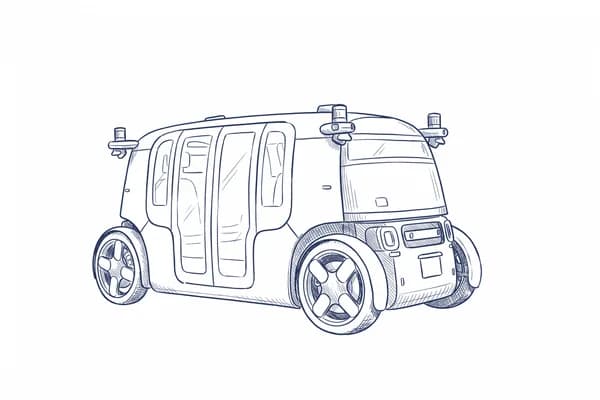
| Zoox | Las Vegas; San Francisco | Paid rides in Las Vegas since August 2026 in a purpose-built vehicle with no steering wheel; free rides in San Francisco |
| Tesla | Austin, Dallas, Houston and other cities | Robotaxi service since June 2025, first with safety monitors aboard; some rides without an in-car monitor since January 2026; human-supervised service in the Bay Area |
| Baidu Apollo Go | About 28 cities, mostly in China, plus Dubai and Abu Dhabi | Fully driverless rides; over 23 million cumulative rides by mid 2026 |
| Pony.ai | Beijing, Shanghai, Guangzhou, Shenzhen | Fully driverless, fare-charging rides in designated areas |
| WeRide | Guangzhou, Abu Dhabi, Dubai | Fully driverless rides, in the UAE through Uber |
Watch
Frequently asked
- What is a robotaxi?
- A ride-hail vehicle driven by an SAE Level 4 automated driving system, with no human driver, operating only inside a defined service area and set of conditions.
- Are robotaxis safe?
- Waymo reports that over 271 million rider-only miles through June 2026, its cars had 95 percent fewer serious-injury crashes and 82 percent fewer injury crashes than a human benchmark on the same roads. These are company-published figures, and other operators publish less data.
- Do robotaxis have remote drivers?
- Not at Waymo. Remote staff answer questions from the car but do not drive it, and the car stays in control at all times. The practice varies by operator.
- Why do robotaxis only work in some cities?
- Each service is limited to its operational design domain: the mapped area and conditions it was designed and approved for. Expanding means mapping, validating and getting local approval city by city.
- Where can I ride a robotaxi?
- In the United States, Waymo serves about 15 metro areas, Zoox charges fares in Las Vegas, and Tesla runs a service in Austin and other cities. Abroad, Baidu, Pony.ai and WeRide operate in China and the UAE.
Keep learning, once a week
The weekly digest: the stories worth your time from the autonomous vehicle industry, hand-picked by people who work in it. No marketing gloss.